 ISFHDS International Society for Health Data Science
About ISFHDS
ISFHDS is a global, non-profit society connecting health data scientists, clinicians, and partners to translate data into equitable health outcomes. We prioritize public benefit, reproducibility, and transparency.
Focus Areas
- Real-world evidence and causal inference
- Trustworthy AI/ML and bias auditing
- Privacy-preserving analytics (FL, DP)
- Clinical NLP and multimodal modeling
- Digital health and remote monitoring
- Genomics and multi-omics integration
- Health systems operations and forecasting
- Health equity analytics
Platform & Activities
- Working groups and SIGs
- Open-source toolkits and benchmarks
- Reproducibility challenges and audits
- Training: workshops, tutorials, summer schools
- Community forums and mentorship
Advancing rigorous, open health data science
ISFHDS brings together researchers, clinicians, and partners to build trustworthy, impact-driven data science for health.
Research Programs
Core programs at the intersection of health, data, and AI.
Trustworthy AI
From dataset shift diagnostics to calibration, uncertainty estimation, and post-deployment monitoring of models in clinical settings.
Privacy & Security
Federated learning, secure aggregation, differential privacy, and governance controls for multi-institution health data.
Clinical Applications
Applications across oncology, cardio-metabolic disease, neurology, infectious diseases, aging, and other clinical domains.
Activities & Platform
Shared infrastructure, tooling, and training for the ISFHDS community.
Open Toolkits
Reference implementations for reproducible ML and analytics pipelines, including data curation, training, and evaluation.
Benchmarks
Curated datasets with provenance, licensing, and evaluation cards to support transparent comparisons across methods.
Training
Workshops, tutorials, and summer schools with hands-on labs for students, researchers, and practitioners.
Governance & Compliance
Building frameworks for responsible, auditable use of health data and AI.
Frameworks
- DUA / PIA / algorithm transparency practices
- Ethics-by-design and IRB liaison
- Model documentation and audit trails
Risk & Safety
- Incident response and harm mitigation
- Bias and fairness monitoring
- Secure release and versioning policies
Accessibility & Inclusion
Commitment to inclusive research practices, transparent reporting, and engagement with diverse communities and stakeholders.
Affiliated Institution: GenAIMed Group
A collaborative group focused on generative AI for medicine and life sciences, affiliated with ISFHDS.
About GenAIMed
GenAIMed Group brings together researchers exploring the use of large language models and other generative AI systems in medicine and the life sciences.
The group organizes online seminars, develops best-practice guidelines, and initiates multicenter studies to evaluate real-world performance and safety of these systems.
Experts from universities, hospitals, and industry are welcome to join, contribute case studies, and co-develop methods that responsibly translate generative AI into clinical and research workflows.
How GenAIMed Works with ISFHDS
- Online seminars and community discussions
- Multicenter studies and shared evaluations
- Best practices for safe, ethical deployment
Focus with ISFHDS
As an ISFHDS affiliate, GenAIMed complements the Society’s mission by focusing on rigorous, ethical applications of generative models across clinical and life science domains.
Social Impact
Translating health data science into equitable, real-world outcomes.
Equity-First Metrics
Performance stratified by demographics and SDOH-aware metrics.
Open Education
Curricula and resources for workforce development.
Policy & Standards
Evidence-based briefs and contributions to global standards.
Med Research — Official Journal of ISFHDS
Med Research is a comprehensive medical journal that bridges basic, translational, clinical, and data science research to advance medical knowledge and improve patient care.
Scope & Content
- Original research, reviews, meta-analyses
- Commentaries and correspondence
- Early-phase clinical trials and proof-of-concept
- Epidemiology and health policy
- Diagnostics, biomarkers, therapeutic targets
Topical Areas
- Oncology
- Cardiology & metabolic disorders
- Immunology & inflammation
- Infectious diseases
- Neurology & mental health
- Aging & age-related diseases
- Digital health & medical technology
- Public & global health
- Clinical guidelines & health policy
For Authors & Readers
- Open Access options
- Accepted Articles, Early View, Current & All Issues
- Commitment to ethical, patient-centered research
- Transparent, sustainable practices
- Email alerts and RSS for most recent & most cited articles
- Resources and checklists for referees and peer review
Editorial Board
Editors-in-Chief
- Shuofeng Yuan, PhD — The University of Hong Kong, Hong Kong, China
- Zhixiong Liu, MD — Central South University, Changsha, China
Executive Editors-in-Chief
- Quan Cheng — Central South University, Changsha, China
- Peng Luo — Southern Medical University, Guangzhou, China
Associate Editors
- Yuting Ma — Chinese Academy of Medical Science, Suzhou, China
- Linhui Wang — Navy Medical University, Shanghai, China
- Kai Miao — University of Macau, Macau, China
- Jian Zhang — Southern Medical University, Guangzhou, China
- Hailin Tang — Sun Yat-Sen University Cancer Center, Guangzhou, China
- Guangchuang Yu — Southern Medical University, Guangzhou, China
- Ulf D. Kahlert — Otto-von-Guericke University, Germany
Recommendations
Curated projects, partners, and open resources for medical AI research.

Project Imaging-X
A strategic initiative to consolidate 1000+ open medical imaging datasets worldwide, breaking down data silos through systematic integration to build foundational infrastructure for next-generation medical AI models.

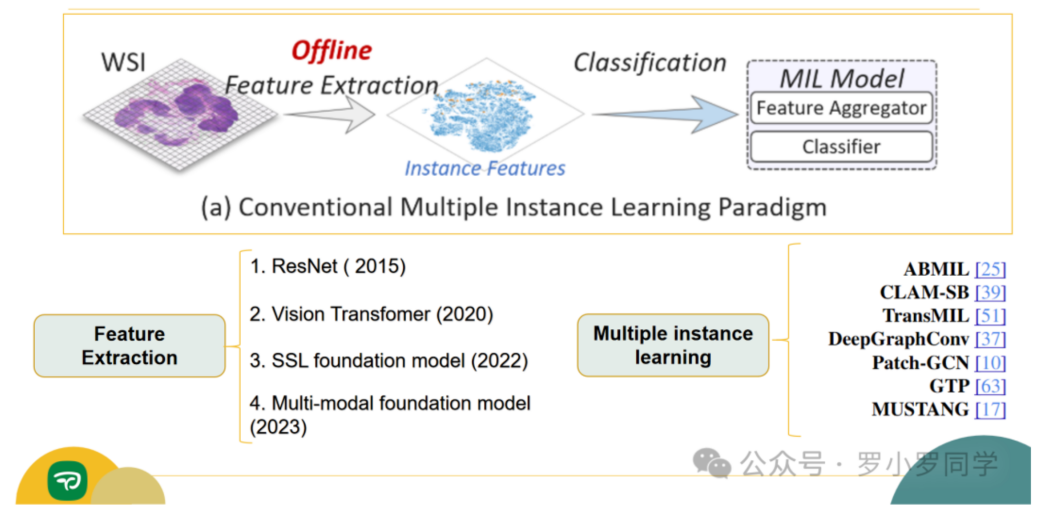
Zero-Code Pathology AI Tool
Slide Classification and Analysis: a full-process visual software with built-in mainstream models and algorithms, enabling zero-code, one-stop pathology slide classification, training, and heatmap analysis.

TCIA: The NCI-Funded Public Archive for Cancer Medical Imaging
The NCI-funded public archive for cancer medical imaging.
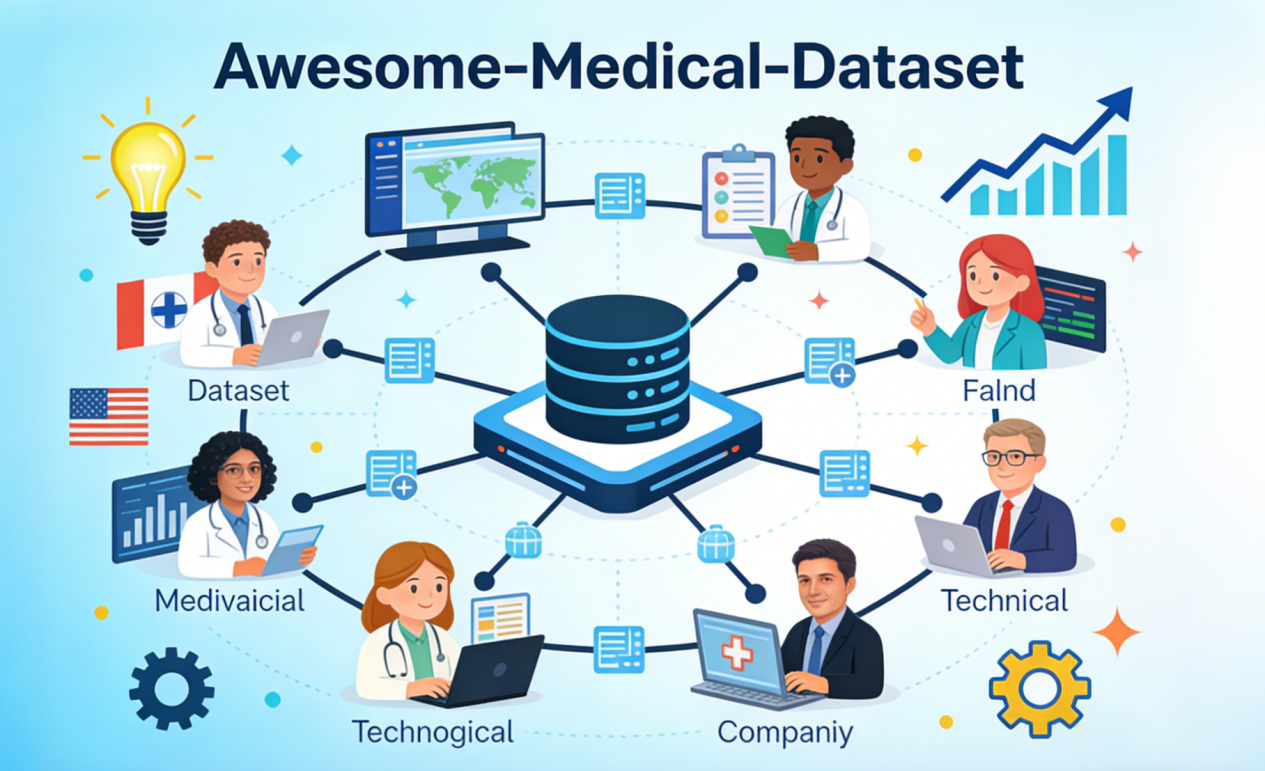
Essential for Medical AI: Datasets & SOTA Benchmarks
A collection of massive whole-body imaging and EHR data, integrating SOTA algorithms and benchmarks to empower medical AI research.
Resources
Frameworks, templates, and training to support rigorous health data science.
Governance Frameworks
- DUA v1.2
- PIA v1.0
- Algorithm Transparency v1.1
- Model Card Template
Training & Support
Office hours and clinics for study design, data governance, ML operations, and deployment.
Reproducible Research
Templates, containers, and CI/CD recipes for health data science projects and multi-site collaborations.
Contact
Send Us a Message
Legal & Compliance
- DUA / PIA / Algorithm Transparency Framework
- Privacy policy and terms of use
- Accessibility and inclusion statement